
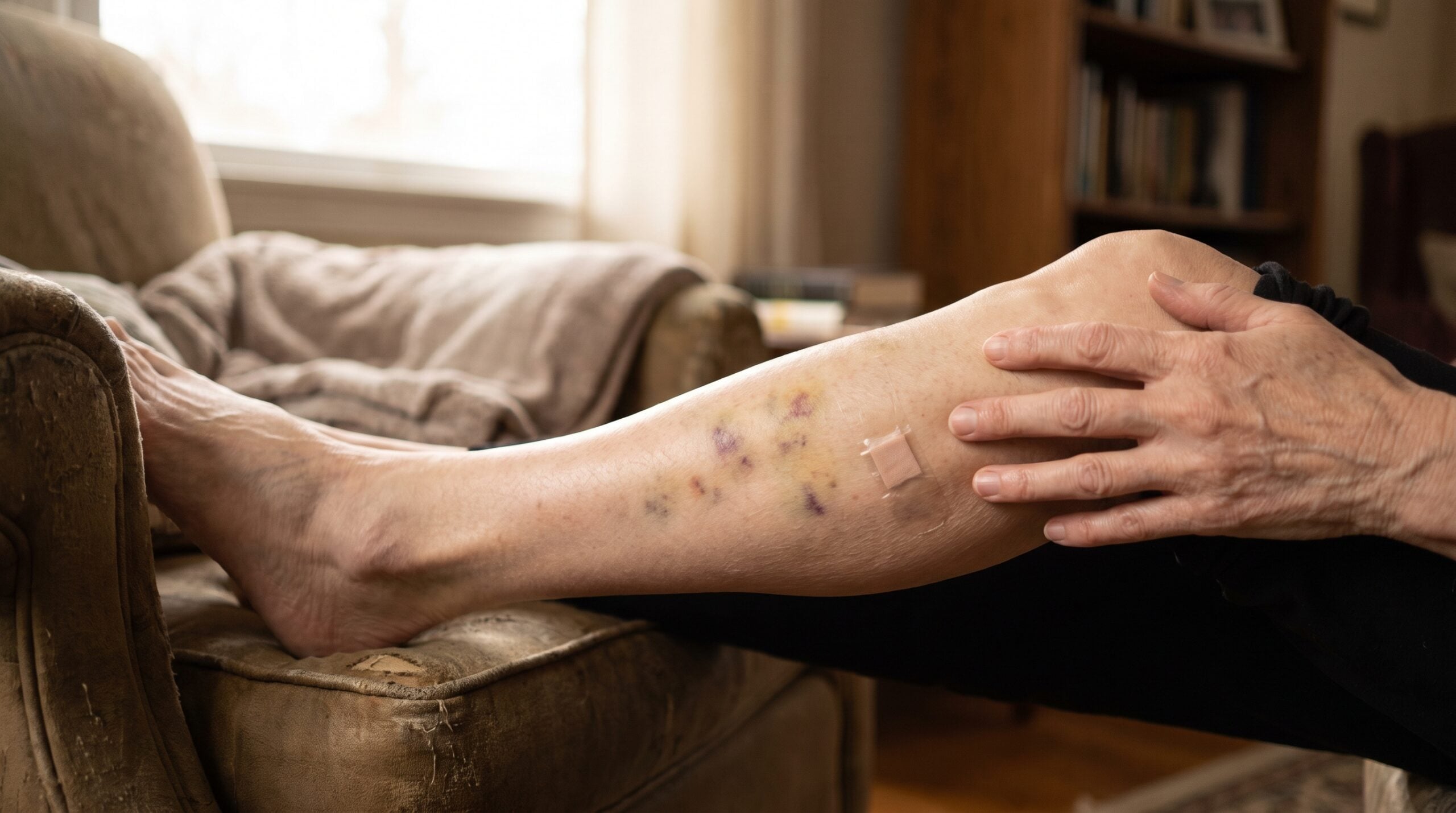
Living with symptoms that don’t add up can wear you down long before anyone gives them a name. Joints that give way without warning. Skin that bruises from almost nothing. A body that seems to work differently than everyone else’s. For a lot of people, EDS is the first word a doctor has said that actually matches what they’ve been feeling, as MedlinePlus describes it.
If you’re holding a new diagnosis, or still wondering whether you might have one, here is what EDS actually is, what it isn’t, and why we look at it as more than a collagen problem. We start here because most people arrive at this page mid-search, not mid-diagnosis, still trying to work out whether the word even applies to them.
What is EDS, exactly?
EDS stands for Ehlers-Danlos Syndrome. MedlinePlus defines it as "a group of inherited disorders marked by extremely loose joints, very stretchy (hyperelastic) skin that bruises easily, and easily damaged blood vessels." The underlying issue is collagen, the protein that gives structure to skin, bone, blood vessels, and internal organs. When collagen is built differently, all of those tissues can behave differently too.
EDS is not one disease with one presentation. It is a family of related conditions. Which one a person has changes what symptoms show up first and how the condition is managed over time. That’s why two people can carry the same three letters on a chart and still describe two very different lives.
What causes EDS?
EDS is genetic, not something anyone does or fails to do. Depending on the type, "the faulty gene may have been inherited from 1 parent or both parents," per the NHS. Sometimes there’s no family history at all. The NHS notes that "sometimes the faulty gene is not inherited, but occurs in the person for the first time." Either way, the collagen comes out built differently, and that difference is what eventually shows up in joints, skin, and blood vessels.
What are the types of EDS?
There are at least 13 recognized types of EDS, and hypermobile EDS (hEDS) accounts for roughly 90% of cases, according to MedlinePlus. Most of the other types are rare, the NHS confirms.
| Type | What tends to stand out | Source |
|---|---|---|
| Hypermobile EDS (hEDS) | Most common form; joints move beyond a typical range | MedlinePlus |
| Classical EDS (cEDS) | Less common than hEDS; skin is more affected than in hypermobile EDS | NHS |
| Vascular EDS | Rare; fragile blood vessels with a higher risk of organ or vessel rupture | MedlinePlus |
Joint hypermobility on its own is common. It affects around 1 in 30 people, the NHS reports. Hypermobility alone is not the same as having EDS. A genetics referral or a specialist evaluation is how the distinction actually gets made, not a checklist you can run through at home.
How serious is EDS?
It depends entirely on the type and the person. "For some, the condition is relatively mild, while for others their symptoms can be disabling," the NHS states. Vascular EDS carries the most serious risk, since fragile blood vessels can rupture, MedlinePlus explains. Hypermobile EDS, the most common type, more often shows up as joint pain, instability, and fatigue rather than organ risk.
This range is part of why a diagnosis alone doesn’t tell you much about your own experience. Two people with the same type of EDS can still live very differently, because severity and which body systems are most affected vary by individual, not only by type on paper.
What does EDS pain feel like?
There isn’t one confirmed pain profile that fits every type of EDS. The features that show up across types, per the NHS, are joint hypermobility, stretchy skin, and skin that bruises or breaks easily. How much these translate into daily pain varies by type and by person. What a specialist actually works from is your own pattern of joint, skin, and other symptoms, not a generic description meant to apply to everyone.
Is EDS a form of autism?
No. EDS is a connective tissue disorder caused by how the body builds collagen. Autism is a neurodevelopmental condition. They are not the same diagnosis, they are not caused by the same mechanism, and having one does not indicate the other. If you’re asking because you or your child shows traits of both, a doctor who can evaluate each condition separately, on its own terms, is the right next step.
What is EDS life expectancy?
People with EDS generally have a normal life span, MedlinePlus states. The exception is the rare vascular type, where the added risk comes from a possible rupture of a major organ or blood vessel, not from EDS shortening life on its own.
Why we look at EDS through the nervous system
EDS itself is genetic. We do not claim to cure or reverse it, and no responsible clinic should. I want to be very honest with you about that from the start.
What we see, again and again, is a diagnosis on paper that doesn’t explain the day. One person’s day is dominated by joint pain. Another’s is dominated by dizziness, digestive trouble, or a heart rate that spikes on standing, and no specialist has connected that back to the EDS diagnosis they already have. In our clinical experience, that gap often traces back to dysautonomia, an imbalance in the autonomic nervous system.
Think of the autonomic nervous system as the electrical panel that runs a house automatically: it dims and raises the load on heart rate, blood pressure, and digestion without anyone touching a switch. In EDS, that panel doesn’t always regulate the way it should.
You are not crazy. These symptoms are real, and they make sense when we look at the nervous system rather than at one joint or one organ in isolation. If you’re newly diagnosed, this framework is worth understanding early, before you settle into treating one symptom at a time. If you’ve carried this diagnosis for years and been through specialist after specialist, this may be what’s been missing. Not one more isolated treatment. A look at how the nervous system connects the things you’ve been told are unrelated.
This is a clinical framework for understanding a patient’s whole experience. It is not a promise of a specific outcome, and it does not replace the genetics workup, specialist care, or emergency treatment a person with EDS may still need. This overview is educational, not a diagnosis, and it does not guarantee any individual result.
Common mistakes people make after an EDS diagnosis
- Treating the diagnosis as the whole picture. A type of EDS explains a mechanism. It doesn’t predict your specific symptoms, their severity, or what will help.
- Assuming all hypermobility is EDS. Hypermobile joints are common; EDS is a specific diagnosis that needs a genetics or specialist evaluation, per the NHS.
- Chasing one symptom at a time. Seeing a joint specialist for joints and a GI specialist for digestion, without anyone looking at how the nervous system connects the two, often leaves patients feeling unheard.
- Dismissing nervous system symptoms as unrelated. Dizziness, fatigue, or digestive trouble can feel disconnected from a joint diagnosis. For many patients, they aren’t.
- Assuming a diagnosis means a shortened life. Most people with EDS have a normal life span. The serious vascular risk applies specifically to the rare vascular type, MedlinePlus confirms.
FAQ
What is EDS life expectancy? Normal for most people with EDS. The added medical risk sits specifically with the rare vascular type, where organ or vessel rupture is the concern, not with EDS in general.
Is EDS a form of autism? No. They’re unrelated diagnoses with different causes: one is a connective tissue disorder, the other a neurodevelopmental condition. Having one doesn’t point to the other.
What is EDS pain like? There’s no single pattern across every patient. Some feel mostly joint instability, some mostly skin fragility or fatigue, and many feel a mix that shifts over time.
How serious is EDS? It spans a wide range, from mild to disabling. Vascular EDS is the type that carries meaningful medical risk beyond joints and skin.
Is hypermobility the same as EDS? No. Roughly 1 in 30 people are hypermobile, and most of them will never receive an EDS diagnosis. Only a specialist evaluation tells the difference.
One thing to do today
Write down your specific symptoms, in the order they showed up. Bring that list to your next doctor or genetics referral appointment. A clear symptom timeline is often more useful to a specialist than the diagnosis name alone. However complicated your days look right now, EDS is something you can learn to work with, not just live around. Hope is still within your reach as you find care that treats the whole person carrying this diagnosis, not just the diagnosis itself.
Related reading: our full guide to Ehlers-Danlos Syndrome (EDS), Hypermobile EDS (hEDS) Effective Treatments, Vascular EDS, and Current Advancements in Diagnosing Ehlers-Danlos Syndrome (EDS).
Recent Posts
- What Is Ehlers-Danlos Syndrome (EDS)?
- Hypermobility Syndrome: What the Diagnosis Actually Means
- Living with POTS: Holistic Pain Management Tips to Consider
- The Importance of Making Health a Priority While Battling Long COVID
- Breaking Down Fatigue, Cognitive Impairment, and the Other Realities of Life With Long COVID